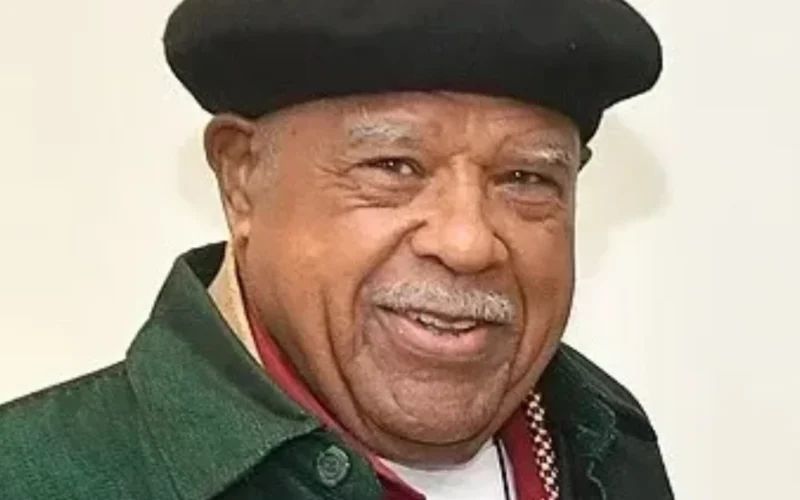
Melvin Edwards, the acclaimed sculptor known for his powerful works exploring racial history, violence, and the Black experience in America, has died at the age of 88. He passed away on March 30 at his home in Baltimore, with the news confirmed by his gallery, Alexander Gray Associates.
Edwards was widely recognized for his striking metal sculptures, often created from chains, tools, and other found materials.
His most famous series, Lynch Fragments, began in 1963 and evolved over decades, reflecting themes drawn from personal experience, global conflict, African heritage, and the broader African diaspora. Despite their often small size, these works carried intense emotional and physical impact.
Born on May 4, 1937, in Houston, Texas, Edwards grew up during a time of deep segregation. After his family briefly moved to Ohio, he was exposed to integrated education and art, experiences that helped shape his perspective. He later attended the University of Southern California on a football scholarship, where he studied art and learned welding skills that would define his career.
In 1965, Edwards held his first solo exhibition, and by 1970 he became the first Black sculptor to receive a solo show at the Whitney Museum of American Art. Around this time, he expanded beyond smaller works to create larger, more confrontational installations using chains and barbed wire.
Throughout his life, Edwards balanced teaching and art-making, holding positions at institutions including Rutgers University. He also spent time in Africa, where he studied and taught metalwork, further influencing his artistic approach.
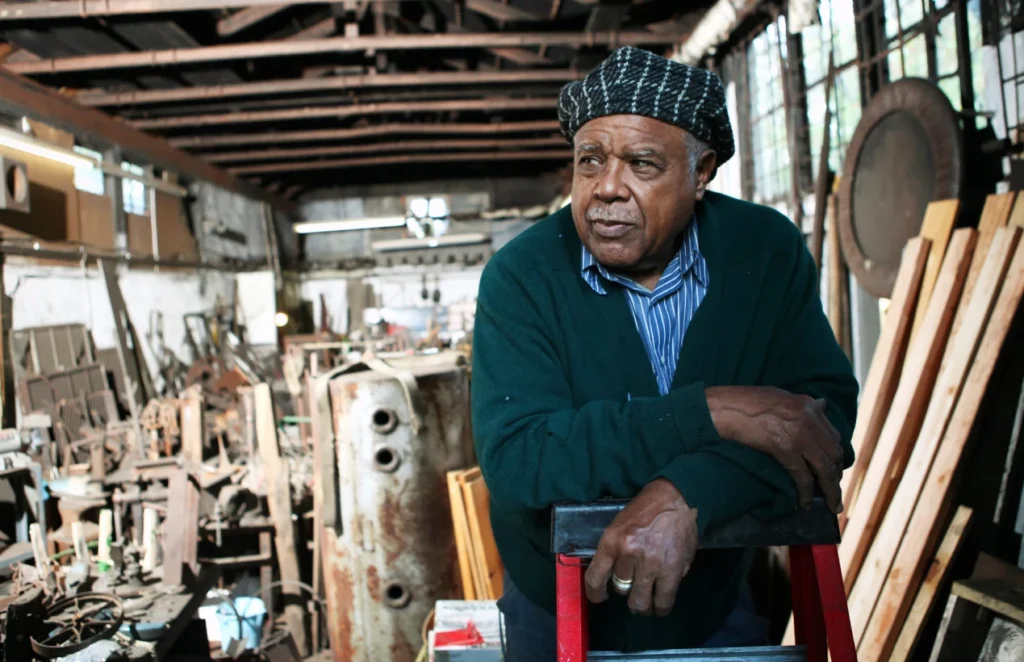
Although recognition came gradually, Edwards’ reputation grew significantly later in his career. Major retrospectives and exhibitions, including appearances at the Venice Biennale and Dia Beacon, solidified his place as a major figure in contemporary art.
His work is now held in leading institutions such as the Metropolitan Museum of Art, the Museum of Modern Art, and the Smithsonian American Art Museum.
Melvin Edwards is remembered as a pioneering artist whose work confronted difficult histories while also expressing resilience, beauty, and human experience. He is survived by his wife, children, and extended family.