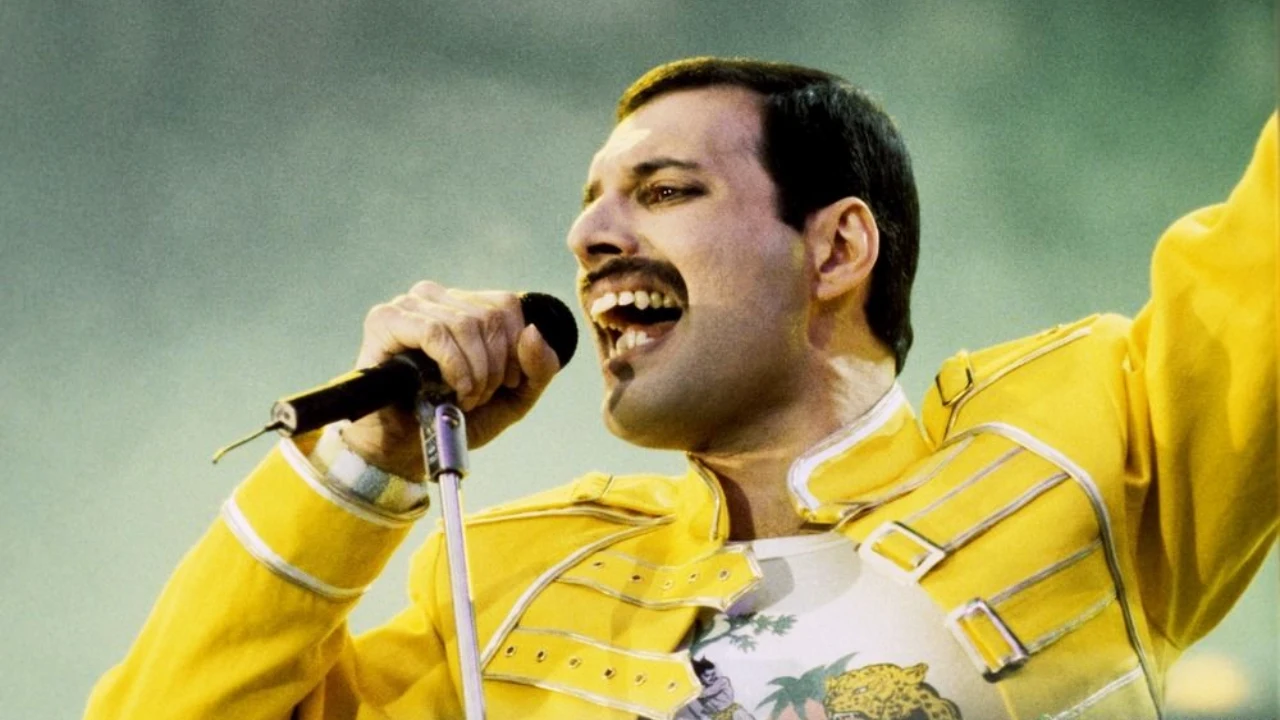
Freddie Mercury remains one of the most recognizable and influential performers in rock history. As the unmistakable voice and charismatic frontman of Queen, he helped create songs and performances that continue to reach new generations of listeners decades later.
But the final years of Mercury’s life also revealed another side of the legendary performer. Away from the enormous stadium crowds that had defined much of Queen’s success, he continued making music while dealing privately with serious health problems.
Freddie Mercury’s Final Years With Queen
By the mid-1980s, Queen had become one of the biggest rock bands in the world. Their celebrated appearance at Live Aid in 1985 further strengthened Mercury’s reputation as an extraordinary live performer.
Queen continued touring afterward, culminating in the Magic Tour in 1986. The band’s concert at Knebworth Park on August 9, 1986, ultimately became Queen’s final live performance with Mercury.
Although fans didn’t know it at the time, an important chapter in Queen’s history had come to an end.
Mercury did not stop creating music.
During his later years, he continued working with Queen while also pursuing projects outside the band. One of the most notable was his collaboration with Spanish soprano Montserrat Caballé, which resulted in the album Barcelona.
He Continued Recording Despite His Declining Health
As Mercury’s health deteriorated, he increasingly withdrew from public life. However, his commitment to recording remained.
Queen released The Miracle in 1989, followed by Innuendo in 1991. Mercury continued recording with Brian May, Roger Taylor and John Deacon during this period.
One of the most memorable recordings from this era was “The Show Must Go On,” a song that would later become closely associated with Mercury’s determination during his final years.
Mercury also appeared in what became his final music video with Queen, “These Are the Days of Our Lives,” filmed in May 1991.
The restrained performance was very different from the energetic Freddie Mercury audiences had watched command stadiums around the world. It became one of his most remembered final appearances.
Freddie Mercury’s Final Public Statement
For much of his illness, Mercury kept details about his health private.
On November 23, 1991, he publicly confirmed that he had AIDS.
The following day, November 24, Freddie Mercury died at his home in London. He was 45 years old.
His death shocked music fans around the world and brought an extraordinary era of Queen’s history to a close.
The Freddie Mercury Tribute Concert
Mercury’s influence did not disappear with his death.
On April 20, 1992, Brian May, Roger Taylor and John Deacon joined numerous major artists at Wembley Stadium for the Freddie Mercury Tribute Concert.
The event celebrated Mercury’s life and music while also helping raise awareness of HIV/AIDS.
It was also connected to the creation of the Mercury Phoenix Trust, an organization established in Mercury’s memory to support the fight against HIV/AIDS.
His Music Continued After His Death
Queen still had recordings featuring Mercury that had not appeared on a completed Queen studio album during his lifetime.
The surviving members of the band later worked with material Mercury had recorded during his final period.
The result was Made in Heaven, released in 1995.
For fans, the album offered another opportunity to hear Mercury’s voice on newly completed Queen material several years after his death.
Why Freddie Mercury’s Legacy Still Endures
Freddie Mercury’s legacy extends far beyond his distinctive voice.
He helped redefine what a rock frontman could be, combining musicianship, theatricality and an extraordinary ability to connect with enormous audiences.
Queen’s catalog also demonstrated Mercury’s versatility as a songwriter. Songs he wrote include “Bohemian Rhapsody,” “Somebody to Love,” “We Are the Champions” and “Crazy Little Thing Called Love.”
His influence has continued long after 1991.
Queen’s music remains part of popular culture, while new generations continue discovering Mercury through recordings, concert footage and the band’s history.
Perhaps that is the clearest measure of his legacy.
Freddie Mercury’s final years marked the end of his life, but they did not mark the end of his influence. Decades later, his performances, songs and unmistakable presence remain an enduring part of rock history.